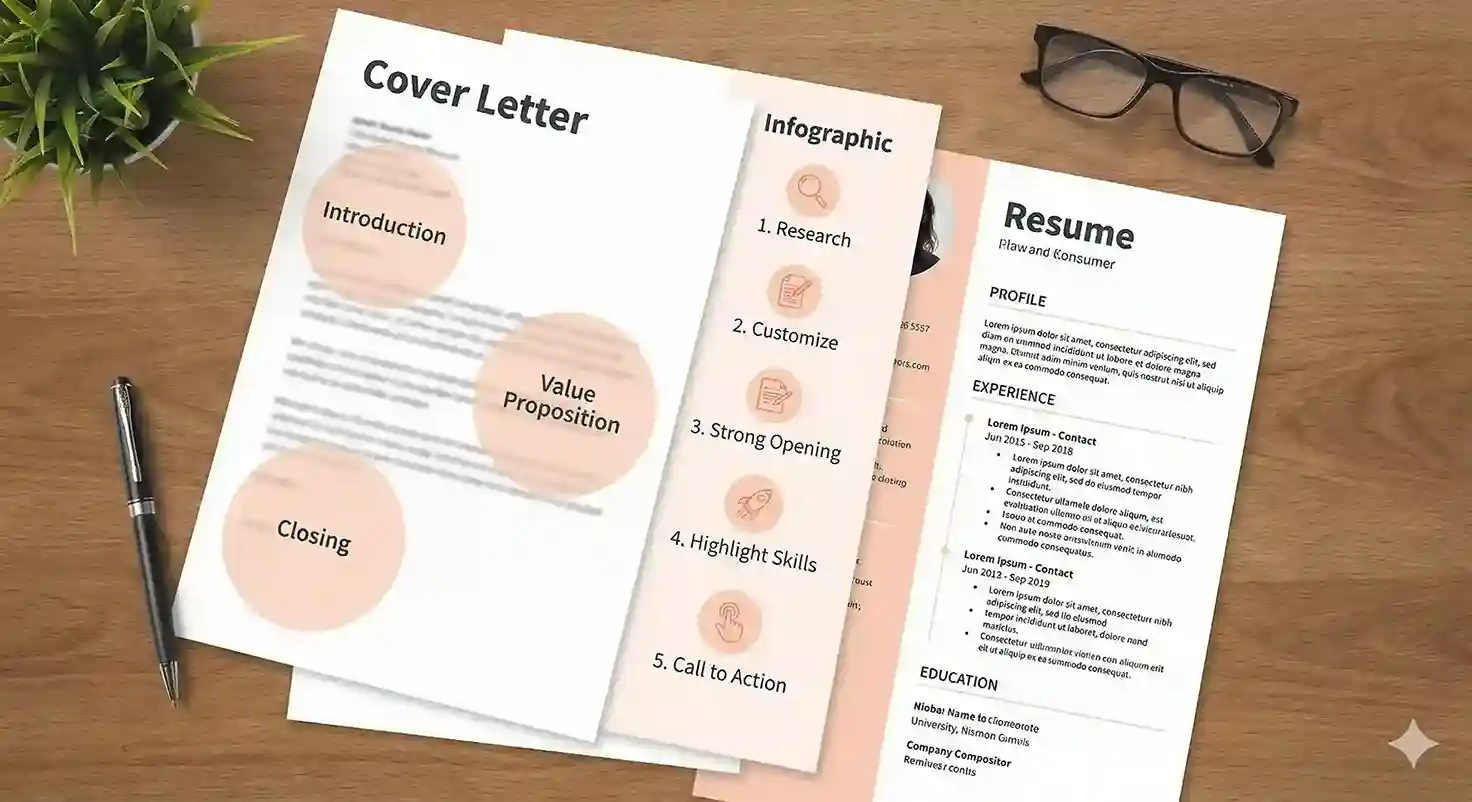
A strong cover letter doesn't repeat your resume—it builds context around your achievements and aligns your experience with the company’s needs. Think of it as a short, personalised pitch that answers one question: Why you, for this role, at this company, right now?
The 3-Part Structure
Most effective cover letters follow a simple three-part structure. You don’t need fancy language; you need clarity, relevance, and a clear connection to the job description.
- Introduction: Show enthusiasm and mention the role and company.
- Body: Prove your value with one or two strong, relevant examples.
- Closing: Show confidence, restate your interest, and clearly mention the next step.
1Write a Compelling Opening Paragraph
Your opening must avoid clichés like “I am writing this letter to apply for…”. Instead, blend enthusiasm with a specific reference to the company or role.
Powerful Opening Line
I’m excited to apply for the Marketing Analyst role at RazorTech, where my data-driven approach increased campaign ROI by 140% last year.
- Mention how you found the role or your connection to the company (referral, event, product user).
- Show that you understand what the company does or what stage they’re in (growing startup, market leader, new product launch).
- Avoid generic flattery; be specific and honest.
2Use the Body to Prove You Can Do the Job
The middle section should focus on 1–2 stories that prove you can perform in the role. Choose stories that are similar to the challenges mentioned in the job description.
- Pick one key responsibility from the job description (e.g., manage paid campaigns, handle customer escalations, lead a team).
- Match it with a concrete achievement from your past experience.
- Explain what you did, how you did it, and what impact you created.
Impact-Focused Body Paragraph
In my current role as a Marketing Analyst at NovaLabs, I manage monthly ad spends of ₹8L across Google and Meta. By restructuring our campaigns around user intent and refining our negative keyword strategy, I reduced cost-per-lead by 27% while increasing qualified leads by 35% in three months.
3Close With Confidence, Not Desperation
Your closing paragraph should sound confident and forward-looking—not apologetic or desperate.
- Re-state your interest in the role and how you can contribute.
- Mention that you’d welcome the chance to discuss your fit in more detail.
- Thank the hiring manager for their time—short and professional.
Strong Closing Example
I’d welcome the opportunity to discuss how my experience in performance marketing and analytics can support RazorTech’s growth goals for 2025 and beyond. Thank you for considering my application.
Common Cover Letter Mistakes to Avoid
- Repeating your resume line by line instead of adding context.
- Writing one generic letter and sending it to every company.
- Over-using buzzwords without proof (hardworking, passionate, innovative).
- Making it all about what you want, instead of what the company needs.
- Writing more than one page—keep it within 3–4 short paragraphs.
How Long Should Your Cover Letter Be?
Aim for 250–400 words. Shorter than that often feels shallow; longer than that becomes tiring to read. Remember, your goal is to make the hiring manager think: “This person understands our problem and has done this before.”
Simple Template You Can Reuse
- Paragraph 1: Who you are, the role you’re applying for, and why this company.
- Paragraph 2: One strong story showing a relevant achievement.
- Paragraph 3: Another short example or summary of your strengths.
- Paragraph 4: Confident closing with a thank you and a call to action.