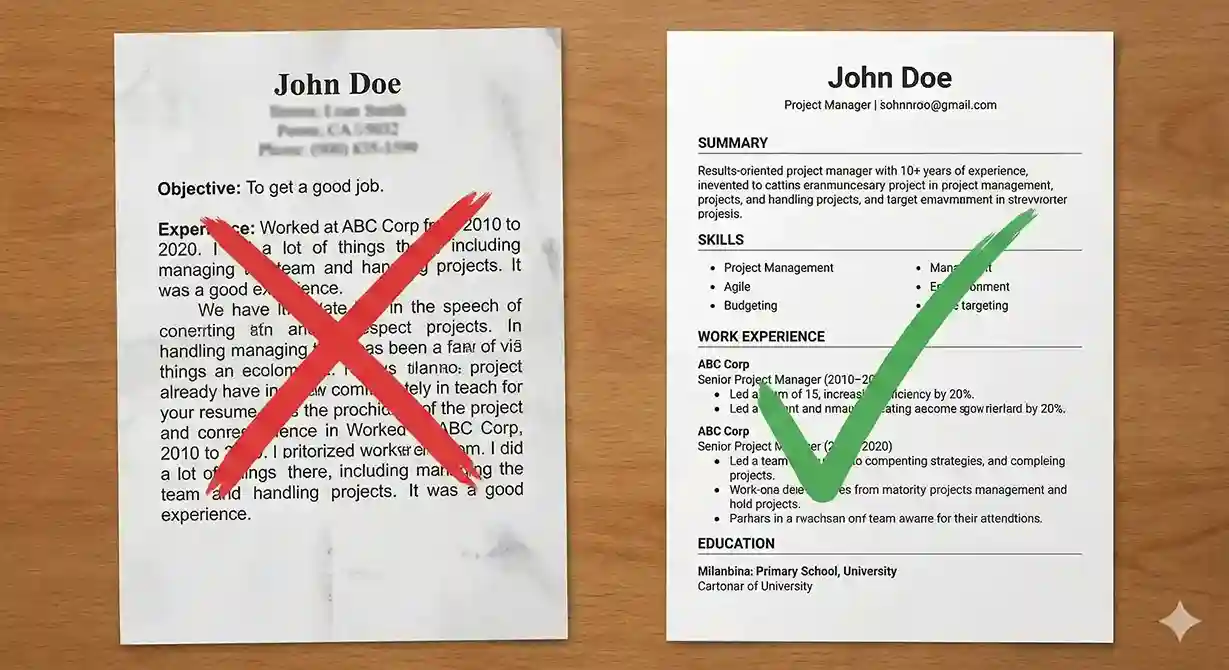
A single mistake—wrong format, typos, or irrelevant information—can cost you an interview opportunity, even if you’re otherwise qualified. The good news is most common resume mistakes are easy to fix once you know them.
1Using One Generic Resume for Every Job
Sending the same resume to every role makes you look unfocused. Recruiters can quickly see when your resume doesn’t match the job description.
- Adapt your summary, skills, and a few bullet points for each role.
- Highlight experience and projects most relevant to the job.
2Overloading With Design and Colours
While some creative roles require visual resumes, most jobs do not. Heavy designs may confuse ATS and distract from your content.
3Writing Responsibilities Instead of Achievements
Listing what you were “responsible for” does not show what you actually accomplished.
Weak vs Strong
Weak: “Responsible for social media posts.” Strong: “Created and scheduled social media content that increased Instagram engagement by 60% in 4 months.”
4Making the Resume Too Long
Recruiters rarely read three or four pages. For most professionals, one to two pages is enough.
5Including Irrelevant Personal Information
- Avoid adding: marital status, religion, parents’ names, full postal address.
- Focus on information that supports your application: skills, achievements, projects.
6Poor Formatting and Inconsistent Styling
Inconsistent fonts, bullet styles, or spacing make your resume look unprofessional.
7Typos and Grammar Errors
Small spelling mistakes send a big signal about your attention to detail.
8Using Unprofessional Email IDs
Fix Your Email
Change from “rockstarbaby123@gmail.com” to “firstname.lastname@gmail.com” or a similar professional format.
9Hiding Employment Gaps Poorly
Gaps are not automatically a problem, but hiding or lying about them is. Use honest dates and be prepared to explain what you did in that time (upskilling, caregiving, freelancing, etc.).
10No Clear Focus or Role Target
A resume that tries to be everything for everyone ends up matching nothing strongly. Be specific about the kind of role you’re targeting in your summary, skills, and experiences.